The surface cleanliness of optical lenses and optical elements is a critical factor determining imaging quality. Submicron dust particles or residual fingerprints can cause optical diffraction, increased haze, and micro-scratches, directly impairing key performance indicators of optical devices such as the Modulation Transfer Function (MTF).

BSL (Baoshili) has specialized in manufacturing clean wiping products for 27 years, with full-industry-chain capabilities spanning spinning, weaving, and finished product processing. Its Cleanroom Wiper product line covers multiple models including 100% polyester, microfiber, and anti-static wipers. Among them, microfiber cleanroom wipers are widely adopted in the cleaning processes of precision optical components, thanks to their superior properties including a soft surface, high-cleanliness wiping performance, and high adsorption efficiency.
01 Technical Challenges in Optical Coating Cleaning
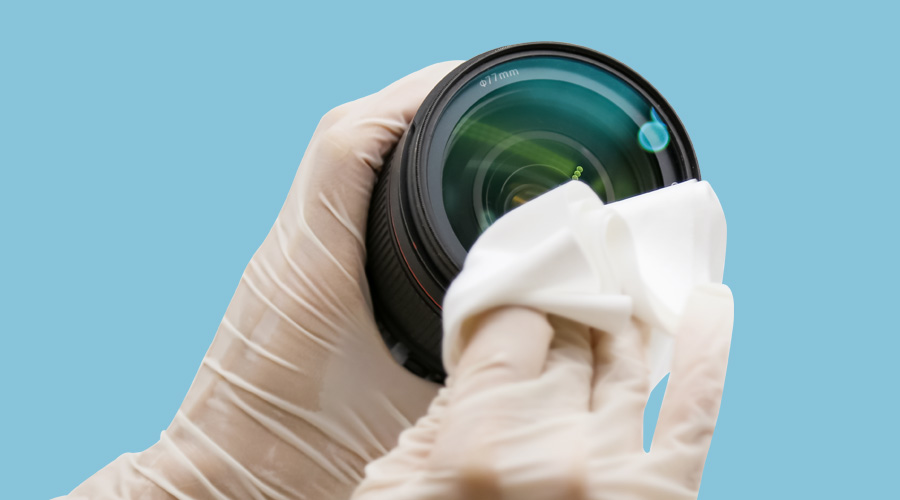
High-end optical lenses are typically coated with multiple layers of anti-reflective or protective functional films (e.g., AR coatings). These films have limited hardness and are extremely sensitive to mechanical abrasion. Industry evaluation data shows that over 92% of lens optical performance degradation stems from micro-scratches on coatings caused by improper cleaning.
Ordinary wiping cloths have relatively thick fiber diameters, which easily cause physical damage to lens surfaces during wiping. Meanwhile, their short staple fibers are prone to breakage and shedding, resulting in secondary particle contamination.
BSL microfiber cleanroom wipers are woven from continuous filament micro-denier fibers, delivering enhanced micro-particle encapsulation and physical adsorption capacity. Combining high dust-holding capacity with fast liquid absorption, they can quickly trap solvents and contaminants during wiping to prevent particle re-release.
02 Core Technical Strengths
-
Full-industry-chain manufacturing with full quality traceability
BSL operates a 30,000-square-meter self-owned production base. The entire workflow — from raw material screening, fabric weaving and ultrapure water cleaning to packaging in Class 100 cleanrooms — is fully self-controlled, ensuring consistent physical properties and cleanliness across every product batch.
-
Diverse edge-sealing processes to control microfiber release
Multiple edge-sealing solutions are available, including hot cutting, laser sealing and ultrasonic sealing. For the stringent requirements of optical cleaning, laser edge-sealing technology creates flat, smooth fused edges through precise thermal control, preventing lint shedding caused by repeated friction and stress during dynamic wiping.
-
Standardized quality inspection system to guarantee technical specifications
Equipped with advanced testing instruments, we conduct quantitative tests on core indicators of each batch, including particle release level, liquid absorption rate and ion extractables, to ensure the consumables meet the standards for Controlled Environments.
-
Customized application scenarios with rapid demand response
For various scenarios such as semiconductor optical equipment maintenance, precision wiping of camera lenses and batch cleaning of optical components in production lines, BSL can customize grammage, dimensions and packaging forms in line with customer technical specifications, providing targeted clean wiping solutions.

The precision attribute of the optical industry sets high standards for cleaning consumables. Leveraging its deep manufacturing expertise, full-industry-chain quality control capabilities, and professional product testing system, BSL provides professional, reliable clean wiping solutions for optical lens and element cleaning.


 online service
 +86 592 625 8655-ext-622
 carrie@xmbsl.com
 carrielin36
 +8613850062482


 English
 français
 español
 日本語
日本語 Tiếng việt
 中文
中文